
Professional Cleaning Services in the London Borough of Hounslow
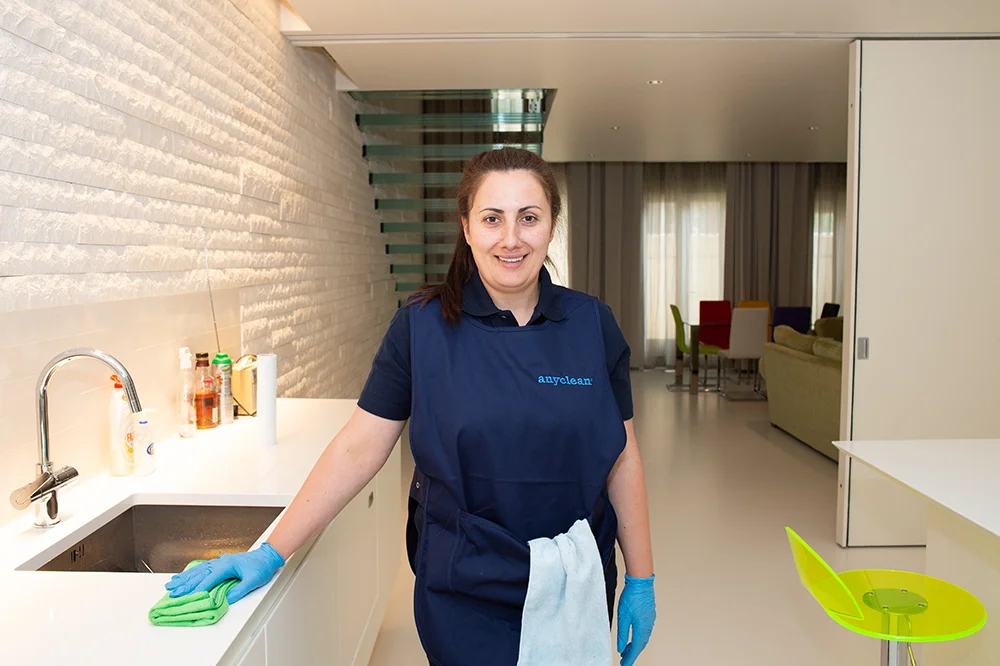
House Cleaning Experts Since 1998
- Obligation-Free Quote - Response Within the Hour
- Over 25 Years' Experience Cleaning Hounslow Homes
- Fully Insured for Residential Cleaning
- DBS Checked, Referenced & Thoroughly Vetted Staff
- Consistent, Dedicated Cleaner Assigned to Your Home
- Weekly, Fortnightly or One-Off Visits Accommodated
- Products & Equipment Provided at No Extra Cost
- Easy Rescheduling - 24 Hours' Notice Required
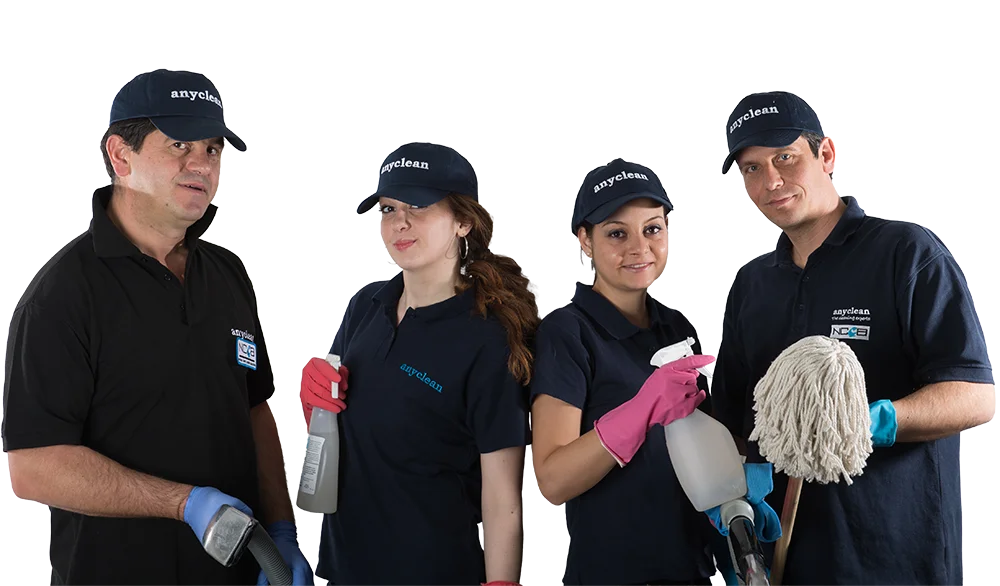
Our Services
Serviced Districts within the LB of Hounslow
Brentford
Chiswick
Cranford
East Bedfront
Feltham
Grove Park
Gunnersbury
Hanworth
Hatton
Heston
Hounslow
Isleworth
Lampton
Old Chiswick
Osterley
Woodlands
Why Choose Anyclean
We have run Anyclean as a family business since 1998, and that has never changed - one independent company, no franchise structure, and no outside interests influencing how we operate. We hold ISO 9001:2015 for quality management and ISO 45001:2018 for health and safety, and we put both certifications through an independent audit every year without fail. We carry comprehensive public liability and employer's liability insurance across every service we provide.

Pricing
We put each quote together from the service type, the property and its size, and the precise scope of what the work involves - we set it all out in writing before anything starts, so you have a clear figure in hand from the outset. We are not the cheapest cleaning company in the London Borough of Hounslow, and we say that plainly rather than letting you find out later. What the price reflects is a team we select carefully, train to a consistent standard, and keep fully insured, paired with the reliability to deliver work correctly and on schedule without you having to prompt us along the way.
Customers who have worked with us over the years have nearly all reached the same point independently: the quote that comes in lowest is rarely the one that delivers the most. If dependable results, communication that is straight and clear, and a company that sees the job through properly are what you need, we'd be glad to quote for you.
Frequently Asked Questions
Drying time depends primarily on the cleaning method used, the volume of moisture applied, carpet pile thickness, and ventilation in the room. Hot water extraction - our recommended method for most fitted carpets - achieves drying times of between two and six hours under good conditions. Encapsulation and dry carpet cleaning methods use significantly less moisture and dry within one to two hours, making them better suited to situations where rapid reuse is the priority. Anyclean uses high-powered extraction equipment that removes the maximum amount of moisture during the cleaning itself - this is the single biggest factor in fast drying. To speed up drying after we leave, open windows, run central heating, and keep internal doors open to maximise airflow. Avoid walking on carpets with outdoor shoes until fully dry. We advise on expected drying times for your specific carpet type and pile during the booking process.
A standard regular domestic visit does not include inside kitchen cupboards, inside the oven, or inside the fridge - these are deep clean tasks that require additional time and are priced accordingly. A regular visit covers all the surfaces, floors, and fixtures that accumulate soiling between visits: bathroom and kitchen surface cleaning, floor vacuuming and mopping, dusting and wiping throughout, bin emptying, bed making, and skirting boards, door handles, and window sills. Inside appliances, inside cupboards, grout scrubbing, and behind-furniture cleaning are addressed during the initial deep clean Anyclean recommends before any regular contract begins, and then periodically - every three to six months - as a planned supplement to the regular visit schedule. If you want inside appliances cleaned on a regular basis, we include this within the scope and allocate additional time accordingly. We agree on the full scope of your regular visits during the booking process and document everything on your account.
A vacant property accumulates a specific set of issues that a standard clean doesn't address - fine dust settling on every horizontal surface and inside cupboards, cobwebs throughout, mould growth in bathrooms and on window frames where condensation has built up without ventilation, limescale in bathrooms and kitchens, and a general staleness that surface wiping alone cannot resolve. Anyclean recommends a full deep clean for any property vacant for more than a month. Our teams work through the property systematically - clearing dust from all surfaces, including high-level areas, light fittings, and inside cupboards; treating and removing any mould; descaling bathrooms and kitchens; cleaning all appliances inside and out; scrubbing grout lines; and cleaning all floors, including carpet extraction where carpets are present. We deodorise throughout on completion. For properties being prepared for a new tenancy, we combine the deep clean with carpet extraction and internal window cleaning as a standard package.
Bathroom mould returns after DIY treatment for one reason: standard bleach-based products kill surface mould but don't penetrate the grout, sealant, or tile substrate where the mould colony is actually established. Anyclean uses specialist mould-removal products with sufficient dwell time to penetrate and eliminate the colony rather than bleach over it. Our cleaners treat grout lines, sealant joints, silicone beading, and tiled surfaces - applying product, allowing it to work, then agitating and extracting the residue. We follow mould treatment with thorough grout scrubbing using mechanical agitation and alkaline cleaning agents, and we re-seal grout and sealant lines on completion, where replacement isn't required. For persistent or recurring mould caused by condensation or inadequate ventilation, professional cleaning removes the existing colony - we also advise on the ventilation and heating measures that prevent it returning. All mould treatment products we use are EN-tested and safe for domestic use.
Regular vacuuming removes surface dust and loose debris from upholstery - it doesn't reach the soiling, bacteria, allergens, and odour that accumulate within fabric fibres over months of use. Anyclean's upholstery cleaning penetrates the fabric using hot water extraction or low-moisture injection-extraction methods, loosening and removing embedded soiling, dust mites, pet dander, biological matter, and odour-causing bacteria from deep within the upholstery pile. We treat stains - pet stains, grease, wine, biological stains, and ink - using enzymatic and solvent-based products appropriate to each fabric type before the main clean. We assess fabric composition before selecting our method - synthetic fabrics tolerate hot water extraction well, while natural fibres, including wool, linen, velvet, and chenille, require low-moisture treatment to prevent shrinkage and watermarking. We apply Scotchgard fabric protection on completion, significantly extending the interval before the next professional clean is required.
Moving into a new commercial premises - whether newly built, recently vacated, or following a previous tenant's departure - almost always requires a professional clean before it's genuinely ready for occupation. Anyclean's pre-occupation cleaning covers systematic dust removal from all surfaces, ceilings, vents, and skirting boards; cleaning of all windows and internal glazing; scrubbing and polishing of all hard floor surfaces; cleaning of all washroom fixtures and kitchen facilities; and removal of any installation residue, protective film, or builder's tape from the previous fit-out. For newly built commercial spaces completing construction, our builders cleaning teams remove construction dust, paint splatter, plaster residue, cement smears, and adhesive from all surfaces and floor types. We work directly to your occupation programme and provide the space ready for IT installation, furniture delivery, and staff arrival. We combine pre-occupation cleaning with an ongoing daily commercial cleaning contract where required.
Anyclean's Coverage Across Greater London
Anyclean provides residential and commercial cleaning services across all 32 London boroughs and the City of London.